Trick Riding Saddles
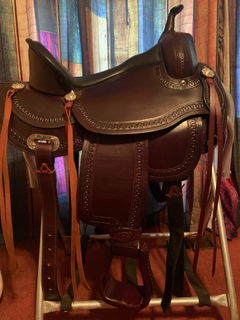
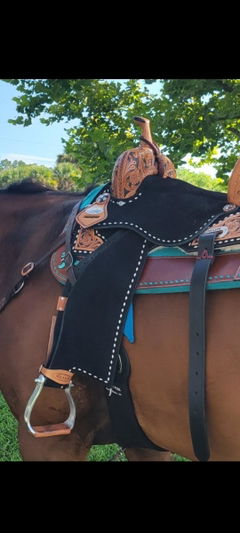
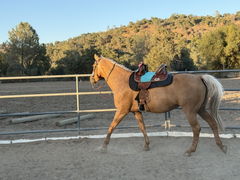
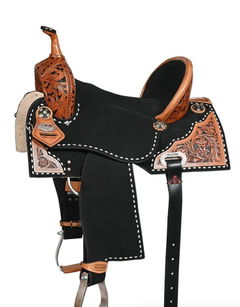
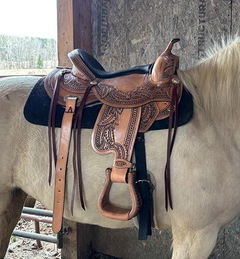
4 productsTrick riding saddles built for performers — custom-crafted from full-grain harness leather with a tall chrome handle post, sheepskin-lined fenders, and a low, stable seat designed for acrobatic maneuvers at speed.


Trick Riding Saddles Buyer’s Guide
Custom Trick Riding Saddles for Rodeo Performers, Vaulters, and Stunt Riders
- Tall Chrome Handle Post: The defining structural feature of every trick saddle — provides a secure grip point for mounting, dismounting, and mid-gallop acrobatic positions.
- Full-Grain Harness Leather Construction: Each saddle is handmade one at a time from top-quality full-grain harness leather — dense, durable, and capable of withstanding the lateral stress unique to trick riding.
- Sheepskin-Lined Fenders: Visible in product images, the natural sheepskin lining reduces friction and allows a rider to reposition quickly without skin abrasion during fast movements.
- Low, Flat Seat Profile: A deliberately shallow seat allows unrestricted movement — riders can shift forward, backward, and laterally without the deep pocket of a roping or trail saddle interfering.
- Silver Conchos and Show Finish: Decorative silver conchos and a clean leather finish make these saddles performance-ready and visually striking in the arena or on film.
- Multiple D-Rings: Additional D-rings provide attachment points for rigging adjustments and safety modifications specific to trick riding rigs.
- Custom Designed: Each saddle in this collection is a rare, custom-built piece — not a production-line saddle.
How to Choose the Right Trick Riding Saddle
Handle Post Height and Grip Style
The handle post — sometimes called a vaulting post or trick handle — is the most critical component of any trick saddle. A taller, stainless chrome post gives more grip surface for complex maneuvers like the hippodrome stand or back drag. Confirm the post is welded directly into the tree, not surface-mounted, for structural reliability under dynamic load.
Seat Design and Rider Movement
A low, flat seat is non-negotiable for trick riding. Deep western seats that work perfectly for trail or ranch riding restrict the hip movement and leg repositioning that trick riders depend on. Look for a seat that sits you upright with minimal pocket — these Hilason trick saddles are specifically engineered with that flat profile.
Leather Quality and Structural Durability
Trick riding places unusual lateral and torsional stress on the saddle tree and leather. Full-grain harness leather — used in every Hilason trick saddle — is the correct material choice: it resists cracking under repeated flex stress and develops a protective patina with use. Avoid saddles built from split leather or bonded leather for this discipline.
Common Mistakes When Buying a Trick Riding Saddle
The most frequent mistake is purchasing a standard western saddle and assuming the horn can substitute for a proper handle post — it cannot. A horn is not structurally designed for the forces a rider applies during acrobatic work. A second common error is choosing a seat size based on general western saddle sizing without accounting for the flat seat geometry specific to trick saddles, which often fit differently than a comparably measured trail seat.
Why the Handle Post Changes Everything in Trick Riding
Riders who transition from a modified western saddle to a dedicated trick saddle with a proper chrome handle post consistently report a significant improvement in confidence during training. The post is not just a grip — it is a structural anchor point that allows the rider to control their own body weight independently of rein contact. This means the horse experiences less interference and the rider can execute maneuvers without relying on balance alone. The sheepskin-lined fenders visible on these Hilason saddles further support transitions: a rider dropping from a stand to a seated position needs surfaces that allow controlled slide, not grip. Every detail of a trick saddle is intentional, and that specificity is what separates it from general western tack.
Trick Riding Saddle Questions Answered
Browse related tack: All Western Saddles | Saddle Pads | Cinches & Girths | Breast Collars