Bronc Saddles
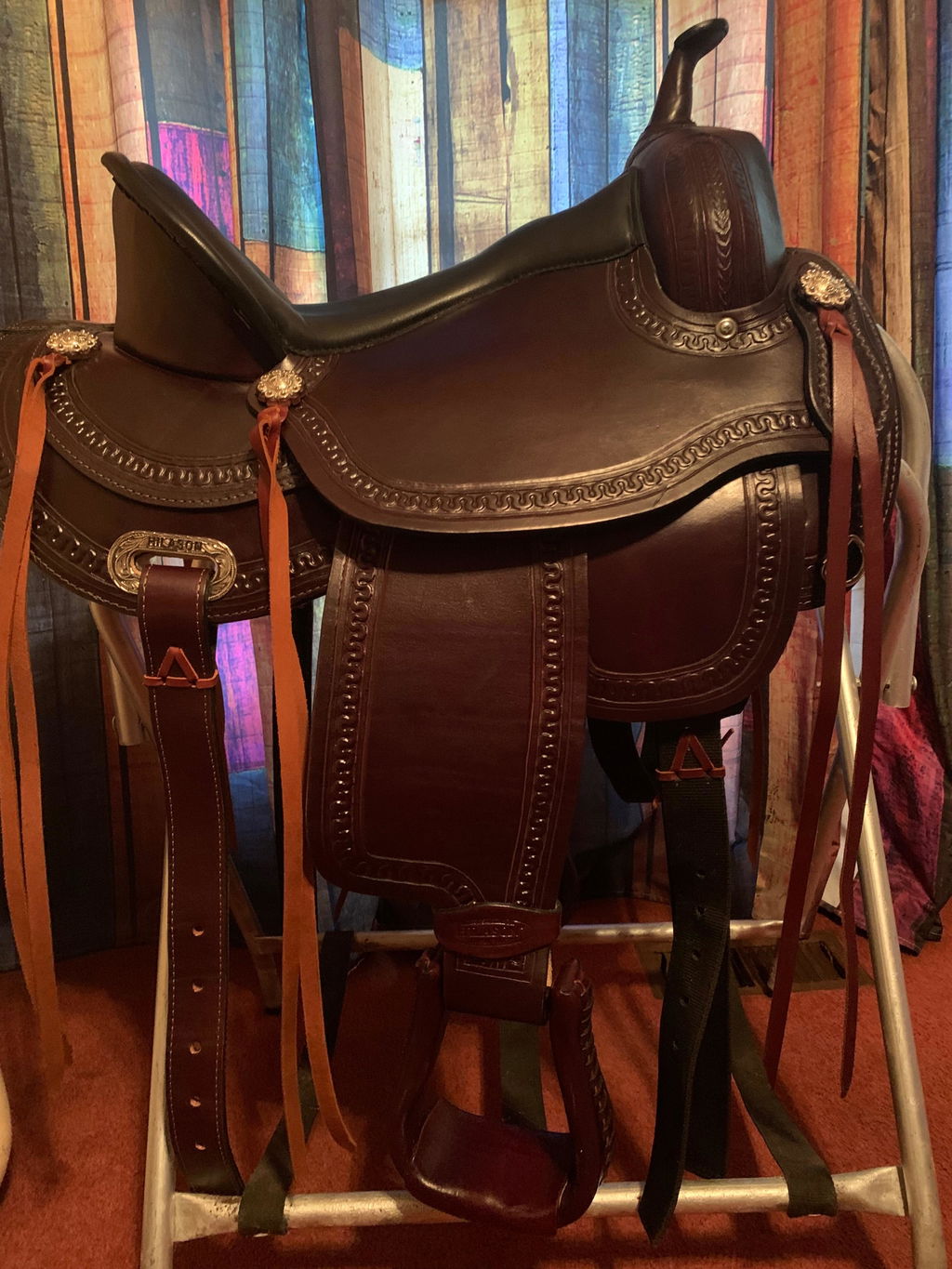
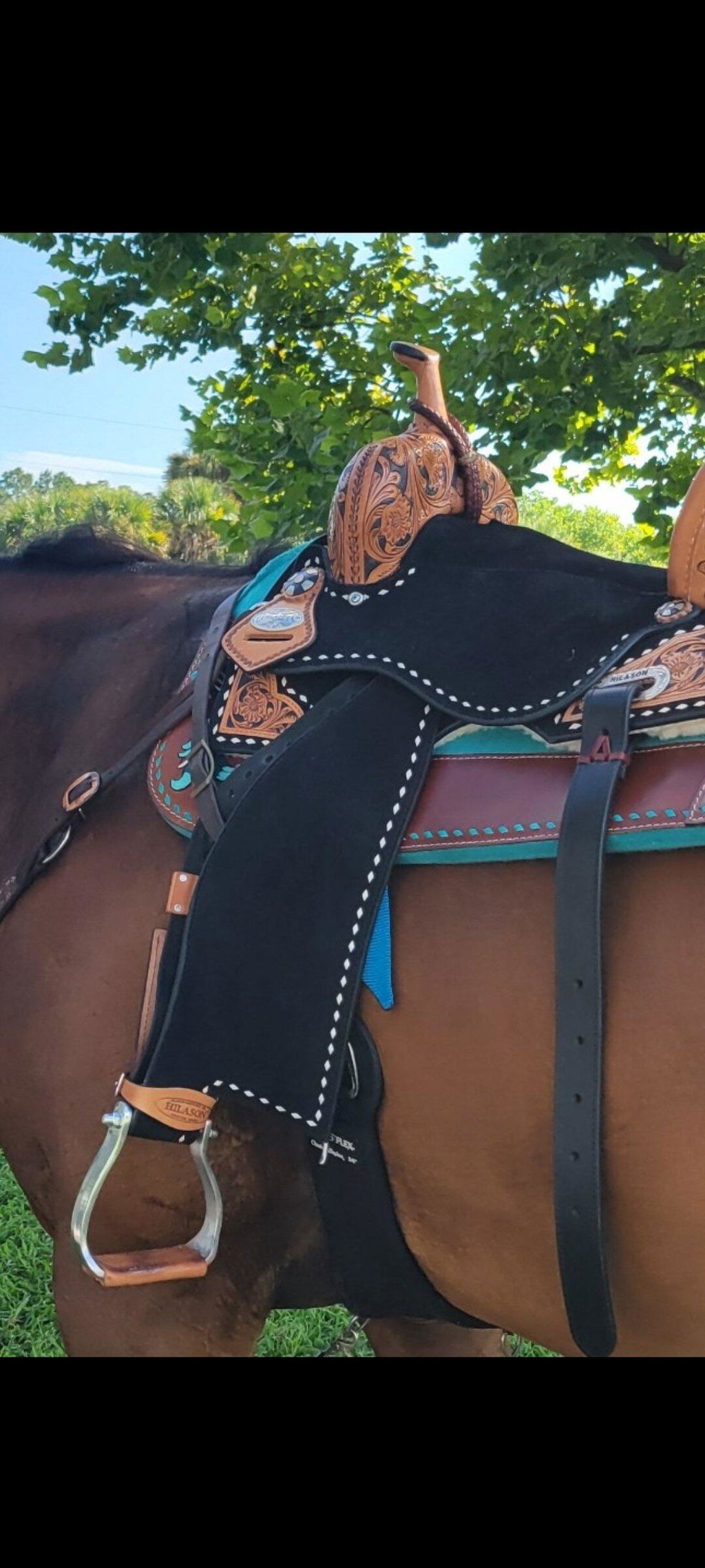
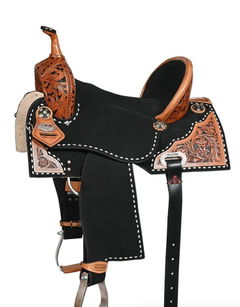
5 productsBronc saddles built for the rodeo arena — each Hilason saddle is handmade one at a time from full grain harness leather with reinforced construction designed to handle the demands of bareback-style bronc riding and rough stock training.


Bronc Saddles Buyer’s Guide
Rodeo Bronc Saddles for Competition, Training, and Rough Stock Work
- Full Grain Harness Leather Construction: Each saddle is built from top-quality full grain harness leather — denser fiber structure than corrected-grain alternatives, meaning it holds up under repeated stress and shapes to the rider over time.
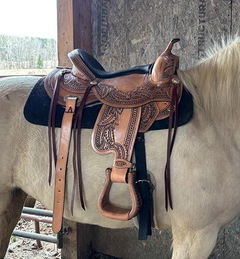
- Basket-Weave Tooling: Hand-tooled basket-weave pattern on cantle and skirts adds grip surface and a classic rodeo aesthetic, visible across the entire Classic Series lineup.
- Roughout Suede Seat: The suede-roughout seat keeps the rider locked in position during extreme horse movement — a critical feature for bronc riding where secure seat contact is non-negotiable.
- Large Oval Bronc Stirrups: Wide-set oval stirrups distribute foot pressure evenly and allow quick, safe release — standard for rodeo rough stock events.
- Handmade One at a Time: Every Hilason bronc saddle is constructed individually — not mass-produced — which means closer attention to stitching, rigging placement, and leather fit.
- Professional Quality Without the Premium Price Tag: Trusted by over 20,000 Hilason saddle owners across the United States and shipped free to all 48 continental states.
How to Choose the Right Bronc Saddle for Rodeo Training or Competition
Seat Size
Bronc saddles are available in 15", 16", and 17" seat sizes. Measure from the base of the horn (or front swell) to the top of the cantle along the seat. Most adult male riders fall in the 16"–17" range, while smaller-framed riders often prefer 15"–16". A proper fit keeps your weight centered over the horse's back and prevents sliding forward during bucking motion.
Leather Quality and Break-In
Full grain harness leather requires a break-in period — plan for conditioning with a quality leather conditioner before first use in the arena. The leather will stiffen less than split-grain alternatives and will conform to your riding position over time, making it a smarter long-term investment for regular rodeo work or rough stock training.
Use Case: Training vs. Competition
Hilason bronc saddles are built to rodeo specifications and are appropriate for both arena competition and ground-level bronc training. The reinforced tree construction and double-stitched rigging support the dynamic stress loads encountered in rough stock events. For casual western riding, consider a standard western saddle — bronc saddles are purpose-built for rodeo demands.
Common Mistakes When Buying a Bronc Saddle
Two mistakes come up repeatedly: ordering the wrong seat size by measuring incorrectly (always measure the saddle seat itself, not your jeans inseam), and choosing a saddle without a roughout seat for rough stock use. A smooth-leather seat in a high-motion event dramatically reduces rider security — always confirm suede or roughout seat construction before purchasing.
What Riders Notice About Full Grain Harness Leather Bronc Saddles After Extended Use
Riders who transition from lower-grade leather saddles to full grain harness leather consistently notice two things: the saddle becomes more supple and personalized with use rather than cracking or stiffening further, and the structural components — particularly the rigging and fender stitching — show less fatigue over a full rodeo season. In rough stock events where saddle integrity is directly tied to rider safety, the density of the fiber structure in harness-grade leather is not a luxury detail — it is a functional requirement. The basket-weave tooling on the skirts also provides subtle grip that smooth-finished leather cannot replicate under arena conditions.