Trail Saddles — Western Trail & Pleasure Riding Saddles
30 productsWestern trail and pleasure saddles built for all-day comfort — available in full-grain harness leather flex tree and durable synthetic styles.


Trail Saddles Buyer’s Guide
Western Trail and Pleasure Saddles for Long Rides, Endurance, and Everyday Riding
- 4-Way Flex Tree: Engineered to move with your horse across varied terrain — reducing back pressure on long trail rides and multi-hour pleasure sessions.
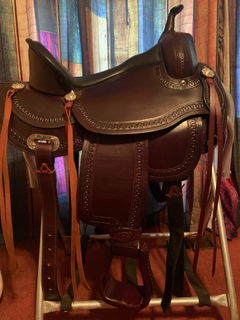
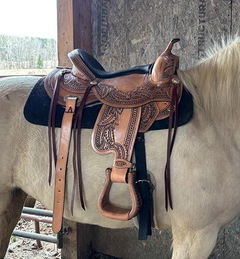
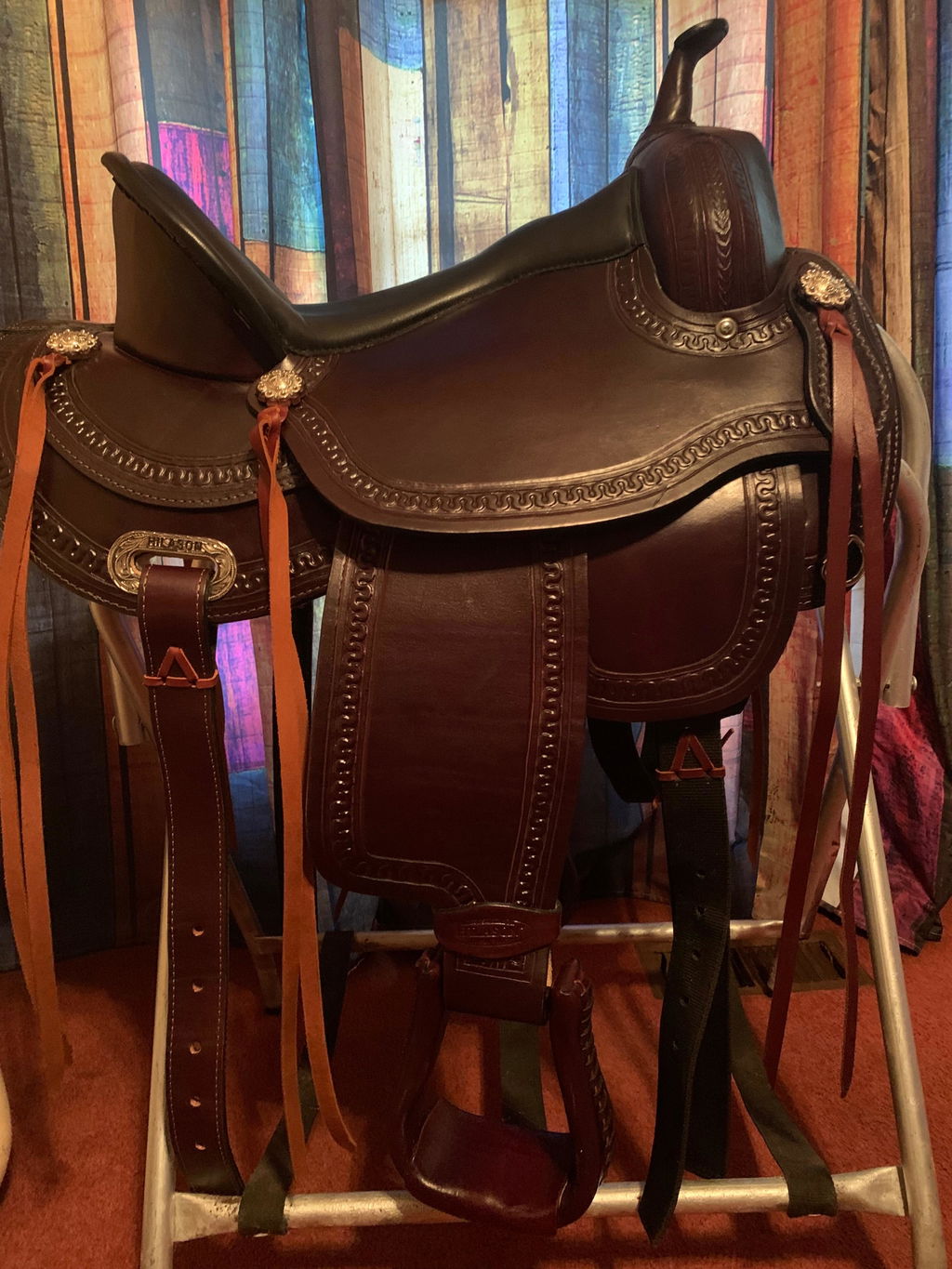
- Full-Grain Harness Leather: Leather models are built from top-quality full-grain harness leather — the same dense, durable hide used in professional-grade western tack — tooled along cantle borders and skirt edges for a finished western look.
- Handmade One at a Time: Every Hilason saddle is hand-crafted individually, allowing careful attention to seat shaping, tree fitting, and leather finishing that production-line saddles simply cannot replicate.
- Silver Concho Hardware: Visible on fenders and cantle — decorative silver conchos add show-ready appeal while stainless hardware at rigging rings resists rust on long, sweaty trail days.
- Wide Padded Seat: Deep, cushioned seat designed to keep the rider centered and comfortable across hours in the saddle — appreciated equally on the rail and on the trail.
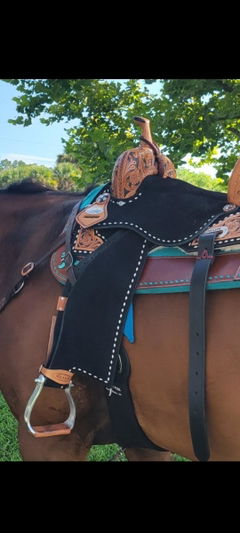
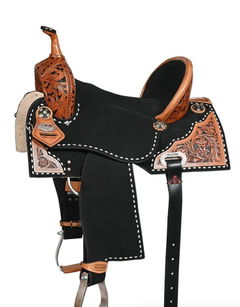
- Synthetic Option Available: Lightweight synthetic saddles in the collection offer easy maintenance and reduced saddle weight — practical for endurance rides and riders who prefer a low-upkeep option.
- Trusted by Riders Nationwide: Over 20,000 Hilason saddle owners across all 48 continental states — high-performance at accessible pricing without compromising build quality.
How to Choose the Right Trail and Pleasure Saddle
Leather vs. Synthetic Construction
Full-grain harness leather saddles offer superior durability, a break-in that molds to horse and rider over time, and a traditional western look with tooled detail and silver conchos. Synthetic saddles are lighter, weather-resistant, and virtually maintenance-free — a strong choice for endurance riders logging high miles in variable conditions.
Tree Type and Horse Fit
The 4-way flex tree in Hilason trail saddles adapts to your horse's back movement rather than locking into a fixed position. This matters most on uneven terrain where a rigid tree can create pressure points over long rides. If your horse has a broader or narrower back than average, the flex tree's dynamic fit reduces the risk of soreness at the withers and lumbar region.
Ride Duration and Use Case
For casual weekend pleasure rides or arena work, the leather flex tree saddles deliver comfort and visual appeal in equal measure. For endurance-style trail riding — multi-hour backcountry or competitive distance work — the synthetic models' lighter weight and wipe-clean surfaces are a practical advantage. Both styles work equally well for general western pleasure.
Common Mistakes When Buying a Trail Saddle
Two mistakes come up repeatedly: choosing seat size based on pants size alone (saddle seat measurement runs differently — measure from base of horn to front of cantle) and assuming any western saddle works for long trail rides (a rigid tree without flex causes pressure buildup over miles; look specifically for a flex or semi-flex tree when riding more than two hours at a stretch).
Why the 4-Way Flex Tree Makes a Difference on Long Trail Rides
Riders who switch from a fixed-tree saddle to a 4-way flex tree often notice the difference within the first hour on uneven ground. A rigid tree stays static while the horse's back rotates and flexes with each stride — particularly pronounced going downhill or across rocky terrain. The flex tree panels move in four directions to follow that motion, distributing weight more evenly across the back rather than concentrating it at two contact points. After a full day on the trail, horses tend to show less post-ride stiffness, and riders report feeling less braced and fatigued in the hip and lower back. It's not a gimmick — it's a mechanical advantage that adds up over miles.
Full-Grain Harness Leather vs. Synthetic — Trail & Pleasure Saddle Comparison
Full-Grain Harness Leather Flex Tree Saddles
Constructed from top-quality full-grain harness leather with tooled cantle and skirt borders, silver conchos, and a deep padded seat. These saddles are handmade one at a time, develop a custom feel with use, and suit riders who want a traditional western appearance alongside all-day trail comfort. Best for: trail riding, western pleasure, show rail work, and riders who invest in long-term tack.
Synthetic Trail & Pleasure Saddles
Lightweight, easy to clean, and resistant to moisture — synthetic saddles in this collection are built for endurance-minded riders who prioritize function over tradition. No conditioning required, and reduced saddle weight means less fatigue for horse and rider on long-distance outings. Best for: endurance trail riding, high-mileage use, wet climates, and riders seeking a low-maintenance western saddle.
Trail & Pleasure Saddle Questions Answered
Complete your trail setup with a quality saddle pad, matching breast collar, or explore the full range of flex tree saddles and cinches and girths to build a trail-ready tack setup.