Roping Saddles — Wade & Ranch Roping Saddles for Sale
83 productsWade and roping saddles built from full grain harness leather — handcrafted one at a time for ranch work, cattle handling, and everyday riding.


Roping Saddles Buyer’s Guide
Wade & Roping Saddles for Ranch Work, Cattle Handling, and Trail Riding
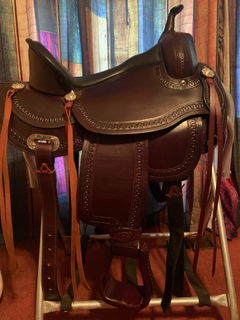
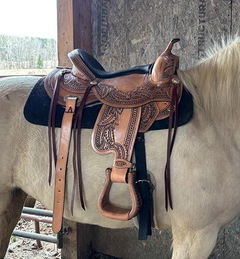
- Full Grain Harness Leather: Every saddle is covered in top-quality full grain harness leather — the same grade used by working cowboys who need tack that holds up season after season.
- Rawhide-Wrapped Horn: The horn is rawhide-wrapped for grip and durability — built to take the stress of dallying without wearing down the leather underneath.
- Deep, Secure Seat: The deep pocket seat positions the rider over the horse's center of balance — essential when working cattle or spending full days in the saddle.
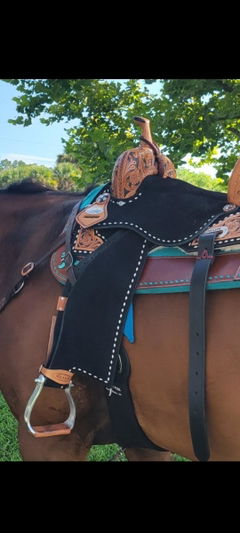
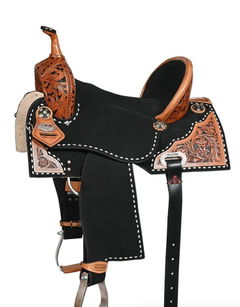
- Hand-Tooled Fenders & Skirts: Basketweave, scroll, and floral tooling patterns are carved by hand across fenders, skirts, and jockeys — each saddle finished one at a time.
- Woolskin Seat & Stirrup Tread: Woolskin-lined seat and rawhide stirrups with woolskin tread reduce fatigue on long days and improve grip regardless of conditions.
- Stainless Hardware Throughout: Stainless dee rings and silver conchos resist rust and maintain finish under daily barn and pasture use.
How to Choose the Right Wade or Roping Saddle
Wade Tree vs. Roping Tree
The wade tree has a rounded, sloped fork that keeps the rider centered without bulk in the front — favored by ranch hands who spend hours in the saddle doing varied cattle work. A roping tree typically has a more reinforced fork and horn designed to absorb the shock load of dallying a roped animal. If your primary work involves heading, heeling, or team roping, prioritize horn construction. If you need a versatile working saddle for sorting, trailing, and general ranch tasks, a wade tree is the stronger choice.
Seat Size
Most working riders fit a seat between 15 and 17 inches. Measure from the front of the seat to the cantle and compare to your inseam — you want roughly two to four fingers of clearance between your body and the swell, and enough space behind you that you are not pinned against the cantle. Most adults ride a 15, 16, or 17-inch seat; taller or broader-framed riders often prefer a 17 or 18 inch.
Gullet Width and Horse Fit
A saddle that fits the rider but pinches the horse is a problem you will feel in your horse's performance before you see it. Wade saddles typically run with a standard gullet suited to Quarter Horse and similar builds. If your horse has high withers, a narrow thoroughbred build, or a very wide draft-cross back, confirm gullet width before ordering or plan to use a contoured saddle pad to fine-tune fit.
Common Mistakes When Buying a Wade or Roping Saddle
The most common mistake is choosing a seat size based on jeans size rather than actual saddle measurement — these are not the same. A close second is selecting a roping-spec saddle for a horse that has not been conditioned for rope work, then wondering why the animal is sore at the withers. Always verify gullet clearance and check that rigging position matches your cinch style before committing.
Why Ranch Riders Choose Wade Saddles Over Other Western Styles
Riders who switch to a wade tree from a traditional western pleasure saddle almost always notice the same things: less forward lean, a more centered position over the horse's back, and better communication through the leg because the fenders hang closer to vertical. On a working ranch, where you might be in the saddle five or six hours sorting cattle, that repositioning matters. The rounded fork keeps your hips free rather than locking you against a wide swell, which reduces fatigue and makes it easier to move with the horse over rough terrain, steep cuts, and tight cattle work. These are not subjective impressions — they are the functional reasons wade trees dominated ranch saddle design for generations.
Wade & Roping Saddle Questions Answered
Explore our full saddle lineup: All Western Saddles | Flex Tree Saddles | Breast Collars | Cinches & Girths | Saddle Blankets