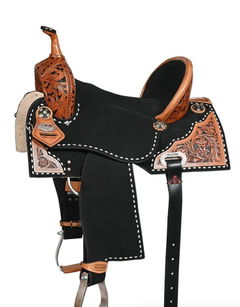
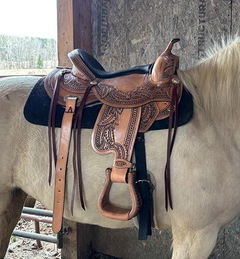
Western Saddles
30 productsWestern saddles handcrafted one at a time from full grain harness leather — Wade, treeless, flex tree, and trail styles built for riders who demand durability without premium markup.


Western Saddles Buyer’s Guide
Western Saddles for Trail Riding, Ranch Work, Wade Roping, and Everyday Pleasure
- Full Grain Harness Leather: Every saddle is built from top quality full grain harness leather — the same material used by working cowboys for generations — delivering dense, supple hide that hardens with use and outlasts lesser grades.
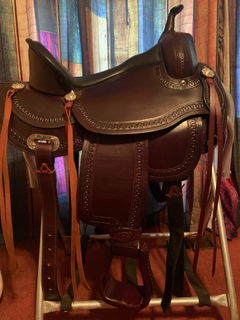
- Handmade One at a Time: Each Hilason saddle is crafted individually by skilled saddlers, meaning no two are rushed off a factory line — consistent construction quality that shows in double-stitched fenders, tight basketweave tooling, and hand-fitted skirts.
- Basketweave & Floral Hand Tooling: Deep-relief basketweave and floral carving across fenders, jockeys, and skirts — visible craftsmanship that holds up in the show pen and on the trail alike.
- Multiple Disciplines Covered: From treeless trail saddles that move with your horse to Wade ranch roping saddles with a deep seat and high cantle, to 4-way flex tree saddles that adapt across disciplines — one collection serves the whole barn.
- Trusted by Over 20,000 Riders: Hilason is the fastest-growing saddle brand trusted by riders across 48 states, offering professional quality without the premium price tag.
How to Choose the Right Western Saddle for Your Riding Style
Tree Type: Traditional, Flex, or Treeless
Tree type is the single biggest decision. A traditional wood or fiberglass tree saddle offers the rigid structure that ranch work and roping demand — horn stability under pressure, consistent seat position, and predictable weight distribution across the bars. Flex tree saddles add 4-way movement so the tree adapts laterally and longitudinally as your horse moves, reducing pressure points on hard or uneven terrain. Treeless saddles eliminate the rigid frame entirely, giving close contact and freedom of movement ideal for trail horses with wide, round backs that standard trees bridge over.
Discipline and Use Case
Wade and ranch roping saddles feature a deep, secure seat with a prominent swells and high cantle — built for working cattle and long hours in the saddle. Trail and pleasure saddles prioritize rider comfort over miles with padded seats and lighter overall weight. If you ride multiple disciplines, a flex tree trail saddle is the most versatile option in this collection, suitable for trail, pleasure, and light arena use.
Seat Size and Fit
Seat sizes in this collection run from 14 inches through 18 inches, covering youth through larger adult riders. A general rule: measure from the back of your thigh to the front of your knee while seated, then add half an inch for working saddles or a full inch for trail saddles where you want room to shift your weight. When in doubt, size up — a slightly large seat is more comfortable over long rides than one that is too snug.
Common Mistakes When Buying a Western Saddle
The most common mistake is choosing tree type based on looks rather than horse back shape — a standard tree on a wide, mutton-withered horse will bridge and cause back soreness regardless of leather quality. The second is sizing the seat to your jeans size rather than your actual sitting measurement. Third: buyers overlook gullet width entirely, only to find the saddle sits low on the withers once placed on their actual horse.
Why Flex Tree Saddles Perform Differently on the Trail
Riders who switch from a rigid tree to a 4-way flex tree saddle typically notice two things first: the saddle stops creaking on downhill terrain, and the horse's back muscles feel less tight after longer rides. The flex tree moves with the horse's lateral back motion at the walk and trot rather than acting as a fixed brace — this matters most on uneven trail terrain where a horse shifts its topline constantly. It does not replace proper saddle fit, but on a horse that fits the gullet width correctly, the 4-way movement reduces focal pressure along the bars on varying grades and side-hills.
Traditional Tree vs Flex Tree vs Treeless — Which Saddle Type Is Right for You?
Traditional Tree (Wade & Roping)
A fixed-tree saddle delivers the rigid structure that ranch roping and working cattle require. The Wade design in this collection features a pronounced swell, deep seat, and high cantle for security when a rope goes taut. Best for: ranch work, roping, riders who need a predictable, stable platform all day long.
Flex Tree
The 4-way flex tree saddles in this collection allow lateral and longitudinal movement in the tree panels, adapting to a wider range of horse back shapes than a rigid tree. They retain a western horn and full seat while reducing pressure point buildup over miles. Best for: trail riding, pleasure riding, and horses with non-standard toplines.
Treeless (Gen XNII / Gen XNIII)
Hilason's Gen XNII and Gen XNIII treeless saddles remove the rigid frame entirely, distributing the rider's weight directly across a padded, flexible base. They conform to wide, round, or hard-to-fit backs and offer close contact not available in treed saddles. Best for: trail horses with wide backs, riders who want close leg contact, or horses that have struggled to fit standard trees.
Western Saddle Questions Answered
Complete your setup with a saddle pad that protects your horse's back, or browse cinches and girths matched to your new saddle. For full outfit coordination, explore headstall and breast collar sets, treeless saddles, and Wade and roping saddles.