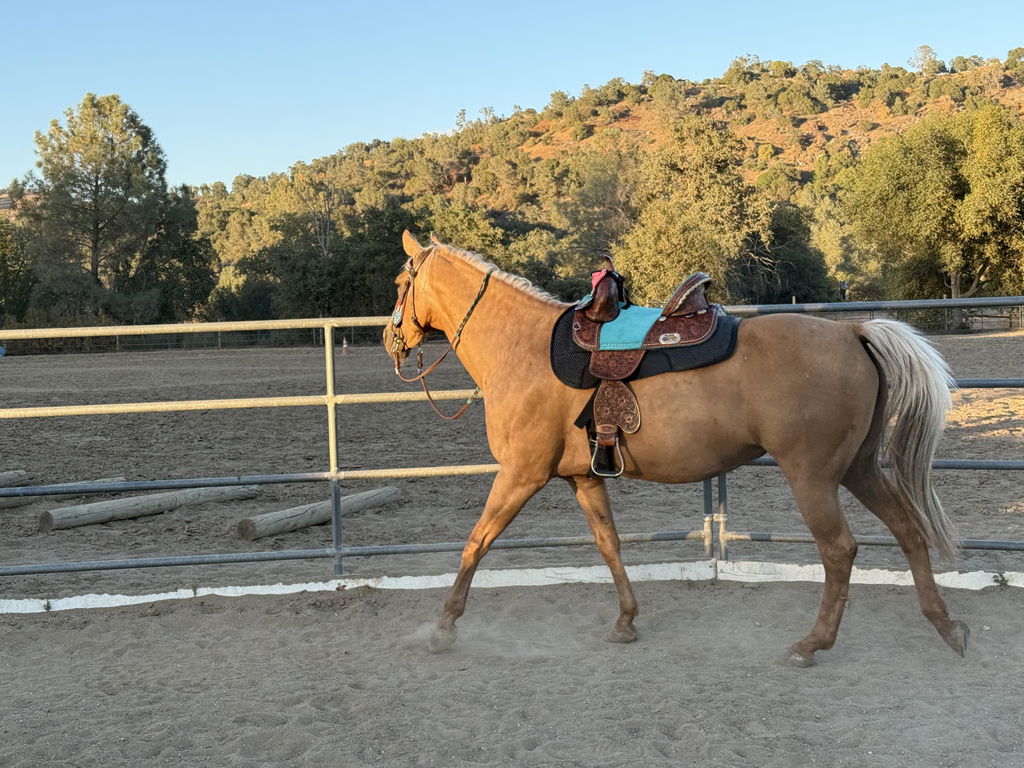
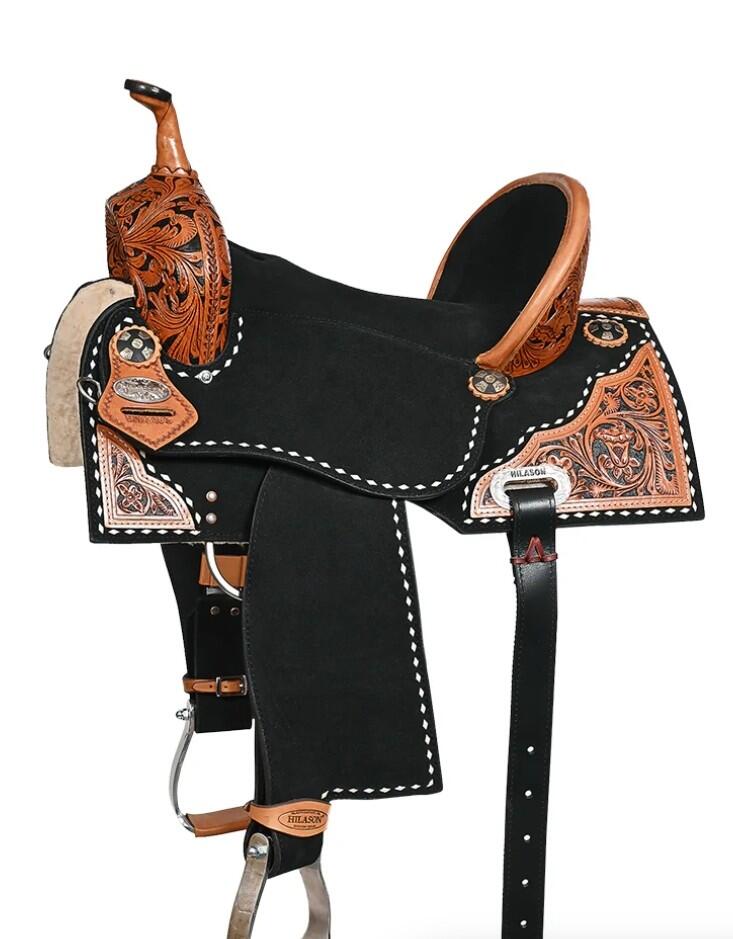
The Complete Guide to Choosing the Perfect Barrel Racing Saddle (2026)
Why Your Saddle Is the Most Important Piece of Barrel Racing Equipment
The barrel racing saddle is more than just a place to sit. It is the primary connection between you and your horse --- the piece of equipment that translates every shift in weight, every leg cue, and every subtle balance adjustment into speed and precision around the cloverleaf pattern. A saddle that does not fit properly, or one that was not designed with barrel racing in mind, will work against both horse and rider. It can cause discomfort that makes your horse reluctant to turn, restrict the shoulder movement needed for tight pocket turns, and leave you fighting your own seat when you should be focused on the clock.
At Hilason, we have seen this firsthand across more than three decades of outfitting riders. Since 1995, we have helped over 40,000 equestrians find saddles that fit their horses and their discipline. This guide draws on that experience to give you a single, authoritative resource for choosing a barrel racing saddle --- from understanding the anatomy of a barrel saddle to testing the fit on your horse before you commit.
What Makes a Barrel Racing Saddle Different
A barrel racing saddle looks different from a roping saddle, a ranch saddle, or a trail saddle for a reason. Every design element serves a purpose in the pattern. Understanding these differences is the first step to making an informed purchase.
Deep Seat for Security at Speed
The seat on a barrel saddle is deeper than what you would find on most western saddles. This deep pocket holds the rider in place during hard acceleration out of the alleyway and through the sharp deceleration and lateral forces of each turn. A properly designed barrel seat keeps your center of gravity low and locked in so you do not have to fight to stay balanced when your horse is giving you everything it has. Look for a seat depth of at least 4 inches; competition-grade barrel saddles typically sit in the 4- to 5-inch range. Hilason's barrel racing saddle collection features deep-seat geometry across every model.
Forward-Hung Fenders for Aggressive Positioning
Barrel racers ride with their feet forward --- more like a jockey than a ranch hand. Forward-hung fenders place the stirrups ahead of the traditional position, which naturally pushes the rider's heels down and forward. This stance does two things: it shifts your weight back slightly to free up the horse's front end for faster turns, and it gives you a stronger brace against the centrifugal force that wants to throw you outward on every barrel. When comparing saddles, check whether the fender attachment sits directly under the swell or slightly ahead of it. For barrel racing, ahead is what you want.
High Cantle for Back Support
A cantle that rises 4 to 5 inches provides critical lower-back support. During the sit-down-and-rate phase before each barrel, you will feel that cantle catch you and keep you from sliding rearward. It also gives you a reference point --- you can feel where you are in the saddle without looking down, which matters when you are running at 30 miles per hour and every millisecond counts.
Shorter Skirt for Closer Contact
Barrel saddles use a shorter, rounder skirt than other western disciplines. A shorter skirt reduces weight, eliminates bulk that could interfere with the horse's hip movement, and brings the rider closer to the horse for better feel and cue transmission. Typical barrel saddle skirts run 23 to 26 inches, compared to 28 to 30 inches on a ranch saddle.
Understanding Saddle Tree: The Foundation of Fit
If the tree is wrong, nothing else matters. The tree is the internal frame of the saddle, and it determines both how the saddle sits on the horse's back and how the rider's weight is distributed. Barrel racing puts unique demands on the tree that do not apply to other disciplines.
Tree Material: Wood vs. Fiberglass vs. Ralide
Wood trees --- typically laminated layers of hardwood like poplar or birch --- are the traditional standard. They offer natural shock absorption and can be adjusted slightly by a qualified saddle maker if the fit needs minor tweaking over time. They are heavier than synthetic alternatives, but many competitive riders prefer the solid feel. A well-made wood tree wrapped in rawhide is exceptionally durable and will hold its shape for decades.
Fiberglass-covered wood trees combine the adjustability of wood with the added strength and moisture resistance of a fiberglass shell. This is a popular choice in mid- to high-end barrel saddles because it resists warping in humid conditions and adds rigidity without excessive weight. Several Hilason barrel saddles use fiberglass-reinforced trees for exactly this reason.
Ralide and other synthetic trees are molded in one piece, guaranteeing perfect symmetry and a consistent fit. They are lighter than wood, completely impervious to moisture, and more affordable to produce. The trade-off is that they cannot be adjusted --- the fit out of the box is the fit forever. For horses with standard conformation, this works well. For hard-to-fit horses, a wood or wood-composite tree gives you more options.
Gullet Width and Bar Angle
The gullet is the channel that runs the length of the saddle underneath, clearing the horse's spine. Barrel saddles typically use a gullet width of 6.5 to 7 inches for quarter horse types. Wider gullets (7 to 8 inches) accommodate broader-backed horses like foundation-bred quarter horses or certain warmblood crosses.
Equally important is the bar angle --- the angle at which the tree bars contact the horse's back. Most barrel saddles use semi-quarter horse bars or full quarter horse bars. Semi-QH bars have a steeper angle suited to horses with more defined withers; full QH bars are flatter and broader for stocky, mutton-withered builds. Putting a full QH bar saddle on a narrow, high-withered horse creates painful pressure points at the wither tips. Putting semi-QH bars on a wide, flat back creates rocking and bridging. Know your horse's back shape before you shop.
Barrel-Specific Tree Features
Many barrel saddle trees incorporate a slight rock --- a gentle curve from front to back --- that helps the saddle settle into the horse's back without bridging. They also tend to have more flare at the front of the bars to accommodate the shoulder rotation that happens during a hard turn. A tree that pinches the scapula will make your horse short-strided and resentful coming into the barrel; one with proper shoulder relief lets the front end stay free and fast.
Saddle Weight: Why Every Ounce Matters
In a sport decided by hundredths of a second, weight is not trivial. A lighter saddle reduces the total load your horse carries, which can translate directly to faster times. But the equation is not as simple as "lighter is always better."
Competitive barrel saddles typically weigh between 20 and 28 pounds. Ultralight models using synthetic trees and minimal tooling can dip as low as 18 pounds. Heavily tooled leather saddles with wood trees may run 30 to 35 pounds. The 5- to 10-pound difference between these extremes represents roughly 0.5 to 1 percent of what a 1,000-pound horse carries --- not huge in isolation, but meaningful over a full run where acceleration and deceleration both require energy.
Lighter saddles also make life easier for the rider. Hauling your saddle from the tack room to the trailer, throwing it up on a tall horse, and handling it during the long days of a multi-run jackpot all add up. Many riders find that a well-balanced 22-pound saddle feels more responsive than a poorly balanced 28-pound one, so prioritize balance and fit over the number on the scale.
Rigging: How Your Saddle Stays Put
Rigging refers to how the cinch attaches to the saddle tree. For barrel racing, the goal is stability: the saddle should not roll, shift, or lift during aggressive lateral movements. Several rigging positions serve this goal.
In-skirt rigging --- where the rigging plate is built into the skirt rather than attached as a separate piece --- reduces bulk under the rider's leg and brings the cinch closer to the horse. This is the most common rigging style on modern barrel saddles and it provides excellent stability with less leather between you and your horse.
3/4 or 7/8 position places the front rigging ring slightly behind the swell, pulling the saddle down and slightly forward against the horse's shoulder. This position resists the backward forces of acceleration and is widely preferred for barrel racing. Full double rigging (front and back cinch) is less common in the barrel pen because the back cinch adds weight and can interfere with the horse's flank during a hard collection.
Drop rigging extends the rigging plate lower on the horse's side, which lowers the pull point and increases stability --- think of it like a lower center of gravity for your cinch system. Some competition saddles use a dropped in-skirt rigging for maximum security.
Sizing Guide: Matching the Saddle to the Rider
A saddle that fits your horse but not you is almost as bad as the reverse. Here is how to size a barrel saddle for the rider.
Seat Size
Seat size is measured from the base of the horn to the center of the cantle. The right size for you depends on your body dimensions, not just your height or weight:
- 13- to 14-inch seat: Youth riders and smaller-framed adults under about 5-foot-4 and 130 pounds. The smaller seat keeps you from swimming in the saddle and gives you a snug pocket.
- 14.5- to 15-inch seat: Average-sized adults --- roughly 5-foot-4 to 5-foot-8 and 130 to 170 pounds. This is the most common size range and what most off-the-shelf barrel saddles are built around.
- 15.5- to 16-inch seat: Larger-framed riders above about 5-foot-8 and 170 pounds. The extra room prevents you from sitting on the cantle or swell, which would compromise your position.
- 16.5-inch and up: Tall or broad riders who need maximum space.
When you sit in the saddle, you should have about 3 to 4 fingers of space between your thigh and the swell, and roughly a hand's width of space behind your seat before the cantle. If you are jammed against the swell, go up a half inch. If you have more than a hand's width behind you, go down.
Stirrup Length and Fender Position
Your stirrups should be set so that when you stand, there is roughly a fist's worth of clearance between your seat and the saddle. In a barrel saddle with forward-hung fenders, your leg should rest naturally with a slight bend in the knee and your heel aligned under your hip. You should never feel like you are reaching forward or pulling your legs back to find the stirrups.
How to Test Saddle Fit on Your Horse
Even the best saddle is useless if it does not fit your horse. Here is a systematic approach to checking fit before you ride.
Step 1: Check wither clearance. Place the saddle on your horse's bare back (no pad) in the position it will sit when cinched. Slide two to three fingers vertically between the gullet and the withers. If you cannot fit your fingers, the gullet is too narrow. If there is more than three fingers of clearance, the saddle is sitting too low and may rock.
Step 2: Check bar contact. Run your hand under the saddle along the bars. You should feel even, consistent contact along the length of the bars with no gaps (bridging) and no concentrated pressure points (which indicate rocking or too-narrow bars).
Step 3: Check shoulder clearance. Have someone lift the horse's front leg and pull it forward as if the horse is taking a stride. Watch the shoulder blade move under the saddle. The tree should not restrict or pinch this movement. You should be able to slide your fingers between the front of the bars and the scapula during the stride.
Step 4: Check with a pad. Repeat the above checks with your riding pad in place. A quality pad can fill minor gaps but cannot fix a fundamentally poor tree fit. If the tree does not fit bare, it does not fit. Browse Hilason's saddle pad selection for pads that complement a proper tree fit.
Step 5: Ride and observe. After a ride, look at the sweat pattern on your horse's back. Even sweat with no dry spots (indicating excessive pressure that shuts off blood flow) and no rubbed or ruffled hair is what you want. Dry spots over the withers or loins are red flags.
Why Hilason Barrel Saddles Stand Apart
Hilason has been building western saddles since 1995, and our barrel racing saddle collection reflects everything we have learned about what competitors need. We use premium leather, reinforced wood-and-fiberglass trees, and forward-hung fender designs that position riders correctly for the pattern. Our saddles ship with a satisfaction guarantee, and with free shipping on orders over $125, you can try your saddle at home with no risk.
Popular models in our barrel lineup include the Hilason Flex-Lite barrel saddle, which combines a lightweight synthetic-reinforced tree with deep-seat geometry and a rough-out seat for grip, and our full-leather competition models with hand-tooled accents that look as sharp as they perform. Every saddle is inspected before it leaves our facility, and our customer support team --- staffed by riders who understand the sport --- can help you match the right tree and seat size to you and your horse.
Leather Quality and Tooling: More Than Looks
The leather on a barrel saddle takes a beating. Sweat, dirt, arena dust, and the constant friction of legs and reins wear on the surface. Full-grain leather --- where the natural grain has not been sanded or corrected --- is the gold standard. It breathes, conforms to the horse and rider over time, and outlasts corrected or bonded leather by years when properly maintained.
Tooling patterns on barrel saddles are largely aesthetic, but they do serve a function: deeply tooled leather has more surface texture, which can provide extra grip in the seat and jockey areas. A rough-out seat (where the sueded underside of the leather faces up) is a popular option that adds serious stick without the bulk of a suede seat cover. Many Hilason barrel saddles offer this feature standard.
Horn Design for Barrel Racing
The horn on a barrel saddle tends to be taller and thinner than on a roping saddle but thicker than a cutting saddle horn. It serves as a handle during the run --- not for pulling yourself around the turn (which unbalances the horse), but as a stabilizing point you can grab if things go sideways. A horn that is too short gives you nothing to hold; one that is too tall can catch clothing or your arm. Look for a horn height of roughly 3 to 3.5 inches with a neck that comfortably fits most hand sizes. Some barrel saddles feature a slightly angled horn that follows the natural angle of your grip.
Swell Width and Thigh Support
Barrel saddle swells are typically narrower than those on ranch or roping saddles. A narrow swell lets the rider's legs hang closer to the horse for better cueing and reduces the overall width of the saddle, which cuts weight. However, the swell should still provide enough surface area to brace against. Look for a swell width of 12 to 13 inches as a sweet spot --- enough to support your thigh under hard lateral forces without interfering with your leg position.
Common Mistakes When Buying a Barrel Saddle
- Buying based on looks alone. A beautiful saddle that does not fit is a wall decoration, not a competition tool. Fit comes first.
- Ignoring the importance of a trial period. A saddle that passes a static fit check on the ground may still create problems at speed. Buy from a company that offers a trial or return window, like Hilason's satisfaction guarantee on every barrel saddle purchase.
- Choosing the wrong seat size. Riders often buy a seat that is too large, thinking they need extra room. An oversized seat puts you in the wrong position over the stirrups and makes you work harder to stay centered.
- Overlooking pad compatibility. Your pad is part of the fit system. A thick pad can make a properly fitting saddle too tight; a thin pad will not fill gaps in a borderline fit. Test with the pad you plan to ride with. Hilason's tack collection includes pads in multiple thicknesses for fine-tuning your fit.
- Buying used without inspection. Used saddles can have hidden tree damage --- cracks, twists, or broken bars that are invisible under the leather. If you cannot inspect the tree, factor in the cost of a potential rebuild.
Caring for Your Barrel Saddle
A quality barrel saddle is an investment that should last for years with proper care. Clean it after every ride with a damp cloth to remove sweat and dust. Condition the leather every 4 to 6 weeks with a quality leather conditioner --- more often if you ride in dry, dusty conditions that strip natural oils. Store it on a saddle stand in a climate-controlled space; attics, uninsulated tack rooms, and direct sunlight all degrade leather and can warp the tree. Check your cinch and rigging hardware for wear before every ride, and replace any stretched or frayed components immediately.
Final Thoughts
The right barrel racing saddle transforms your ride. It puts you in the correct position without effort, keeps your horse comfortable and free-moving through every turn, and gives you the confidence to push for faster times because you know your equipment will not let you down. The wrong saddle does the opposite --- it fights you, restricts your horse, and leaves both of you frustrated.
Take the time to understand your horse's back shape, measure yourself honestly for seat size, and test the fit methodically. When you find the saddle that checks every box, you will feel the difference on your first run. Hilason's barrel racing saddles are built to deliver that difference. Browse our full collection, read the detailed specifications on each model, and reach out to our team if you need help narrowing down your options. We have been helping riders find their perfect saddle since 1995, and we would be honored to help you too.
Ready to upgrade your ride? Shop the Hilason Barrel Racing Saddle Collection and experience the difference a purpose-built barrel saddle makes, with free shipping on orders over $125 and our satisfaction guarantee backing every purchase.