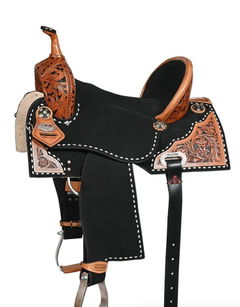
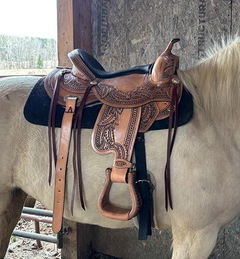
Treeless Saddles
179 productsHilason treeless saddles are built from full grain harness leather and handmade one at a time — spanning four distinct styles to match every rider, horse shape, and discipline.
Quick answer: A treeless saddle is built without a rigid tree, so it flexes more than a traditional treed saddle and gives the rider closer contact. Hilason treeless saddles are made from full grain harness leather in several styles: Classic (GEN XNIII) and GEN XN western treeless, Hybrid, Child, and an English treeless endurance saddle. Prices run from about $475 for the English treeless to about $600 for the child saddle and about $750–$800 for western treeless saddles, some sold with a matching tack set. Use a pad made for treeless saddles.
Treeless Saddles: Quick Answers
Treeless Saddles FAQ
What is a treeless western saddle?
It keeps the look and seat of a western saddle but is built without a solid wood or fiberglass tree. Riders choose one for close contact and for horses whose backs are hard to fit with a treed saddle. Fit still matters: check that the saddle sits level and stays clear of the spine.
Treeless vs. treed saddle — what is the difference?
A treed saddle spreads the rider’s weight through rigid bars, which makes it the usual choice for roping or work that puts heavy loads on the horn. A treeless saddle relies on flexible panels and padding instead, which suits trail and pleasure riding where close contact matters more.
Do I need a special pad for a treeless saddle?
Yes. Because there is no tree to hold the seat off the horse’s back, use a pad with enough thickness and spinal clearance for treeless use. See our saddle pads.
Treeless Saddles Buyer’s Guide
Treeless Western Saddles for Trail Riding, Pleasure, Endurance, and Hard-to-Fit Horses
- Full Grain Harness Leather: Every saddle in this collection is built from top-quality full grain harness leather — denser, more durable, and more water-resistant than split or top-grain alternatives.
- No Rigid Tree: Without a fixed wooden or fiberglass tree, the saddle moves with your horse's back rather than against it — a key advantage for horses with high withers, mutton withers, or asymmetrical backs.
- Handmade One at a Time: Each saddle is crafted individually — not mass-produced — so fit and finish receive genuine attention at every stage.
- Four Sub-Styles Available: Choose from the Classic (GEN XNIII), GEN XN, Hybrid, or Child styles — each engineered for a different rider profile and riding context.
- Trusted Across 48 States: Over 20,000 happy Hilason saddle owners and growing — competition-tested and barn-approved for everyday trail and pleasure use.
How to Choose the Right Treeless Saddle: Style, Fit, and Rider Type
Which Sub-Style Fits Your Riding?
The Classic (GEN XNIII) and GEN XN styles are full western treeless saddles built for trail riding and pleasure — both feature a horn, western fenders, and a western cinching system. The Hybrid style has an English-influenced silhouette but retains a horn, western-style fenders, and a western cinching system — ideal for riders who want English balance with western functionality. The Child style seats younger riders in smaller sizes designed for safety and proportion.
Horse Fit and Back Shape
Treeless saddles are especially well-suited to horses that are difficult to fit with a standard treed saddle — wide backs, high or sensitive withers, or horses whose topline changes seasonally. Because there is no fixed tree pressing into the back, pressure distributes more evenly across the contact surface. Pair your saddle with a quality contoured saddle pad to cushion the contact points and protect the spine channel.
Seat Size and Rider Proportion
GEN XN and Classic western treeless styles are available in seat sizes ranging from 13" to 19" depending on the model, making them accessible to youth through adult riders. The Child style comes in 12" and 13" seats. Select your seat size based on your thigh length and hip width — a properly sized seat keeps you centered and prevents you from sliding forward or bracing against the cantle.
Common Mistakes When Buying a Treeless Saddle
Many riders skip the saddle pad entirely — a critical mistake with treeless designs, since a well-fitted pad is essential for spine protection and even pressure distribution. Others choose a style based on aesthetics alone rather than matching the sub-type to their horse's back and their own riding discipline. Verify seat size based on your own measurements, not what size you ride in a treed saddle, as proportions differ.
What Riders Notice After Switching to a Treeless Saddle
The most consistent feedback from riders who move from a rigid treed saddle to a treeless design is increased feel — you sense your horse's movement more directly through the seat, which helps with balance and aids at the walk and trot. On long trail rides, many riders report less lower-back fatigue because the saddle absorbs and redirects movement rather than transmitting it rigidly upward. Horses that previously showed resistance, back soreness, or reluctance going forward often move with more freedom once a pressure-inducing tree is removed from the equation. This is not a replacement for proper saddle fitting — it is an alternative construction philosophy.
Classic Western vs Hybrid vs Child — Treeless Saddle Styles Compared
Classic (GEN XNIII) and GEN XN Western Treeless
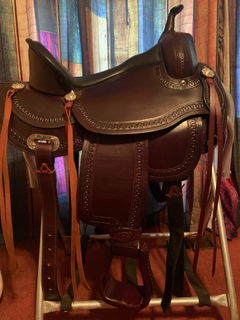
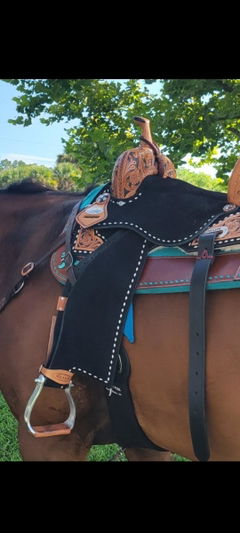
These are traditional western treeless saddles with a horn, deep seat, western fenders, and a western cinching system. Built from full grain harness leather and handcrafted one at a time. Best for: trail riding, pleasure riding, and riders who want a conventional western look and feel without a fixed tree pressing into the horse's back.
Hybrid Treeless
The Hybrid style carries an English-influenced profile — padded knee rolls, a close-contact silhouette — but is equipped with a horn, western-style fenders, and a western cinching system. It sits in the middle ground between disciplines. Best for: endurance riders, trail riders who prefer an English seat position, or gaited horse owners who want western hardware without a bulky western skirt.
Child Treeless
Sized in 12" and 13" seat options, the Child treeless saddle brings the same full grain harness leather construction to younger or smaller riders. The proportions are scaled to keep a child centered and secure without the excess seat depth of an adult saddle. Best for: young riders in western pleasure, trail, or introductory riding programs.